The diagram is an illustration of an experimental set-up. Study it and answer the question below.
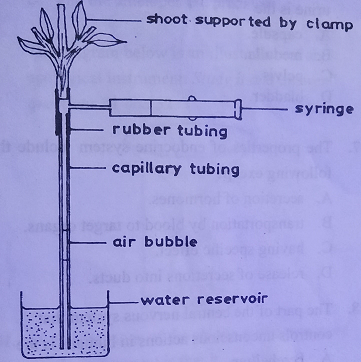
transpiration of water by the shoot
evaporation of water from the leaves
absorption of water by the shoot
loss of mineral salts from the leaves
Correct answer is A
No explanation has been provided for this answer.
Which of the following tissues does not provide support in flowering plants?
Collenchyma
Parenchyma
Xylem
Phloem
Correct answer is D
The main supporting tissues in plants are parenchyma, collenchyma, sclerenchyma (fibre) and wood (xylem).
The yeast cells carried out photosynthesis while the mould did not
Photosynthesis does not take place in the absence of oxygen
Respiration can take place in yeast cells in the absence of oxygen
Respiration does not occur in the mould
Correct answer is C
No explanation has been provided for this answer.
Which of the following materials is not a living semi-permeable membrane?
pig's bladder
Unripe pawpaw fruit
Yam tuber
Sheet of cellophane
Correct answer is D
A semipermeable membrane is a type of biological or synthetic, polymeric membrane that will allow certain molecules or ions to pass through it by osmosis. There are two examples of semi-permeable membrane, which are non-living and living semi-permeable membranes. Examples of non-living semi-permeable membranes that are permeable to water but not solvent e.g copper sulphate solution are visking tube, parchment, and cellophane.
The diagram below is an illustration of the longitudinal section of a plant organ. Study it and answer the question below.
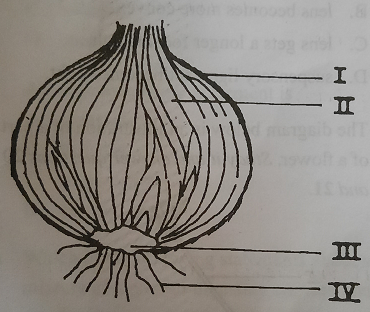
apical bud
scale leaf
adventitious root
fleshy leaf
Correct answer is B
The scales of the onion bulb are actually modified leaves that provide protection from water loss.
WAEC Subjects
Aptitude Tests