I and II only
I and III only
II and III only
I, II, and III
Correct answer is B
No explanation has been provided for this answer.
To control the apread of diseases on a farm, the farmer needs to
Isolate sick animals
Vaccinate sick animals
Introduce sick animals
Quarantine sick animals
Correct answer is A
Sick animals are separated to protect the healthy animals. This is referred to as isolation and it allows sick animals to rest and recover and prevents disease spreading around the pen, group or wider farm.
7th October, 2012
10th October, 2012
31st October, 2012
27th April, 2013
Correct answer is C
No explanation has been provided for this answer.
To increase the chance of the mutiple birth, a farmer should
Steam up farm animals
Creep feed farm animals
Flush farm animals
Castrate farm animals
Correct answer is C
Flushing is a management term for providing high quality feeds, usually grains prior to the start of the breeding to increase reproductive performance. Flushing has been used in the swine industry to increase the number of ovulations in sows.
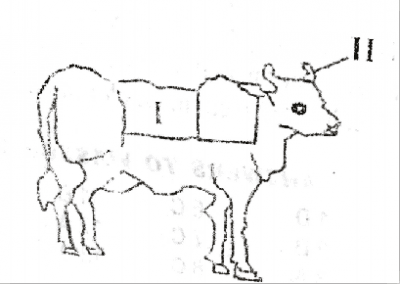
A major advantage of removing the part labeled II is that
Economises the space of keeping the animal
Increase the growth rate of the animal
Makes the animal attractive for mating
Reduces the spread of venereal disease
Correct answer is A
No explanation has been provided for this answer.
WAEC Subjects
Aptitude Tests