The diagram below is an illustration of a structure in the skeletal system of humans. Study it and answer the question
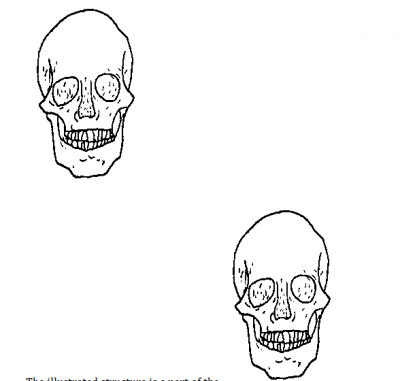
The illustrated structure is a part of the
appendicular skeleton
axial skeleton
axis vertebrae
cervical vertebrae
Correct answer is B
The skull is part of the axial skeleton. It is the bony structure that forms the head and encloses and protects the brain. The skull is located along the central axis of the body, and it is one of the key components of the axial skeleton.
Which of the following soil types have a high capillarity?
Sand and clay
loam and sand
silt and sand
silt and clay
Correct answer is D
Both silt and clay particles have very small pores, which contribute to higher capillarity. When combined, the silt and clay would likely result in a soil with relatively high capillarity.
The diagrams below are illustrations of organisms in a habitat. Study them and answer the question.
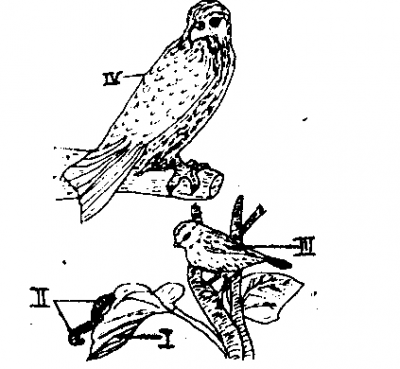
the producer in the diagram is
IV because it is the largest organism in the diagram
IV because it is the organism that receives the highest amount of sunlight
I because it uses sunlight to manufacture food
I because it contains the least amount of energy
Correct answer is C
No explanation has been provided for this answer.
The diagrams below are illustrations of organisms in a habitat. Study them and answer the question.
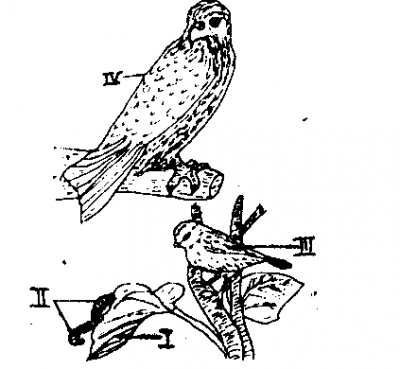
The feeding relationship between the organisms labelled III and IV in the diagrams is
predation
mutualism
parasitism
saprophytism
Correct answer is A
Predation in biology refers to the act of one organism (the predator) capturing, killing, and consuming another organism (the prey) for nourishment.
Which of the following organisms would be the producer in a food chain?
Goat
maize
man
bacterium
Correct answer is C
The producer in a food chain is the organism that produces its food directly from non-living sources (abiotic factors) through processes like photosynthesis or chemosynthesis. Among the options provided, the producer is "Maize." As a plant, maize is the producer in a food chain, serving as the primary source of energy for other organisms.
WAEC Subjects
Aptitude Tests