The structural similarities in Paramecium and Euglena are in the
shape of locomotory organs
blunt anterior and pointed posterior
presence of micro and mega nuclei in both
presence of anterior and posterior contractile vacuoles
Correct answer is B
No explanation has been provided for this answer.
Which of the following groups of animals do not possess a nervous system?
Porifera
Cnidaria
Platyheminthes
Nematoda
Correct answer is A
Porifera are 'pore bearing' organisms, commonly known as sponges, are the only multicellular organisms without a nervous system. Their response to stimuli is by a contraction in their bodies.
Which of the following is not a social insect?
termite
housefly
honeybee
ant
Correct answer is B
Social insects are characterized by Group integration (blending the new members into the already existing social structure), Division of labour, and Overlap of generations (having several breeding seasons, hence having multiple generations present at a time).
In evolution, fossils are naturally preserved in
rocks
water
chemicals
trees
Correct answer is A
Some sedimentary rocks actually have fossils stored in them. Therefore, fossils are stored in rocks.
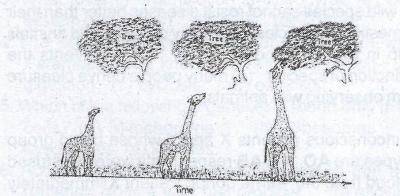
natural selection
struggle for survival
independent assortment
the use and disuse of body parts
Correct answer is D
The theory implies that the more you use a part of your body, with time that part of your body starts adjusting in order to make the work easy.
WAEC Subjects
Aptitude Tests