Use the information below to answer the question
MAN
WAN
LAN
PAN
Correct answer is C
The type of network illustrated above is a LAN or Local Area Network.
A LAN is a network that connects devices in a limited area, such as a school, office, or home. LANs are typically used to connect computers, printers, and other devices together.
In the given scenario, the student is using the school's WiFi to upload personal details on the school portal. The WiFi is a wireless LAN that connects the student's device to the school's network. The ISP and the hostel are both domiciled in the school premises, which means that they are all part of the same LAN.
MAN or Metropolitan Area Network is a network that covers a larger area than a LAN, such as a city or a campus. WAN or Wide Area Network is a network that covers a large geographic area, such as a country or the world. PAN or Personal Area Network is a network that connects devices close to a person, such as a laptop, smartphone, and printer.
In this case, the network is limited to the school premises, so it is a LAN.
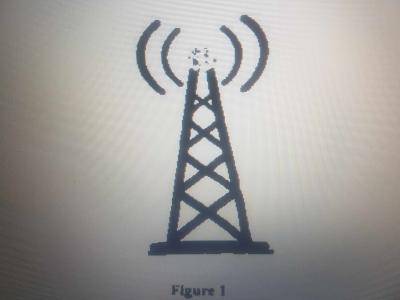
The equipment shown in Figure 1 is used for
Infrared transmission
Ethernet connection
Audio transmission
Radio transmission
Correct answer is D
Radio transmission refers to the process of sending and receiving information using radio waves, which are a type of electromagnetic radiation. Radio waves are used for various forms of communication, including broadcasting, wireless communication, and remote control systems.
Hit the system unit with a blower
Delete some files
Change the location of the computer
Perform maintenance procedure
Correct answer is D
To correct the described problems of a slow, freezing computer system that is also very dusty, the appropriate action is to perform maintenance procedures.
Performing maintenance procedures could involve the following steps:
Cleaning: Dust accumulation can lead to overheating and hinder proper airflow, causing the system to slow down or freeze. Open the computer's case and carefully clean the components using compressed air or an electronics-friendly blower.
Checking for Malware: Slow performance and freezing can be caused by malware infections. Run a thorough malware scan to ensure the system is not compromised.
Checking for Software Issues: Excessive background processes or malfunctioning software can also slow down a computer. Review and uninstall unnecessary or problematic applications.
Updating Software: Ensure that the operating system, drivers, and applications are up to date. Sometimes, updates can address performance issues.
Checking Hardware: Inspect hardware components for any visible damage or loose connections. Reseat RAM, check the hard drive's health, and make sure all components are properly seated.
Removing Unnecessary Files: While deleting unnecessary files might help free up storage space, it might not directly address the issues mentioned.
Note: Hitting the system unit with a blower is not recommended as it could potentially cause further damage to the hardware components. It's important to handle the hardware gently and follow appropriate cleaning methods.
The process of drawing inference from a piece of information is called
Interpretation
Analysis
Collation
Organization
Correct answer is A
The process of drawing inference from a piece of information is called interpretation.
Analysis is the process of breaking down a whole into its parts and examining those parts. Collation is the process of bringing together information from different sources. Organization is the process of arranging information in a logical order.
Interpretation is the process of making meaning from information. It involves using our knowledge and experience to make sense of what we see, hear, and read. When we interpret information, we are drawing inferences about what it means. We are making connections between the information and our own knowledge and experience.
For example, if we read a news article about a car accident, we might interpret the information to mean that the driver was speeding. We might make this inference because we know that speeding is a common cause of car accidents. We might also make this inference because the article mentions that the driver was not wearing a seatbelt. We know that not wearing a seatbelt is also a common cause of car accidents.
Interpretation is an important skill for critical thinking. It allows us to make sense of the world around us and to make informed decisions.
Computer ethical practises include the following except
Respect for intellectual property
Exposure of vulnerability in websites
Use of polite words on other users
Use of other people’s computer without due permission
Correct answer is D
Computer ethical practices include the following, but they do not include:
Use of other people's computer without due permission.
The other options listed are generally considered ethical practices in the realm of computer use and technology. However, using someone else's computer without permission is a violation of privacy and unauthorized access, which goes against ethical guidelines. It's important to respect the rights and ownership of others' devices and
WAEC Subjects
Aptitude Tests